Marie’s ChatGPT-Assisted Deconstruction Blog


Attraction After Deconstruction
As old religious and class-based filters fall away, attraction widens before it sharpens—revealing what actually matters when ideology no longer dictates desire.

When Play Turns Into Belief
Watching people debate the Skunk Ape reveals a familiar pattern: imagination sliding into certainty, play hardening into identity, and belief becoming something that can no longer be questioned.

Reading the Human Animal After Learning to Read Animals
A reflection on how learning to read cats and dogs by nervous system state reveals that humans operate on the same animal logic beneath language, performance, and story.

Reclaiming Inner Voice After Religious Conditioning
A reflection on psychedelic writing that wasn’t mystical or disordered, but a nervous system briefly freed from internal surveillance and trying to establish basic self-trust.

Sexual Speech, Consent, and Unchosen Load
Talking about sex isn’t immoral, but it isn’t neutral either: sexual language recruits other people’s embodied processing, and doing that without consent creates real physiological and emotional load.
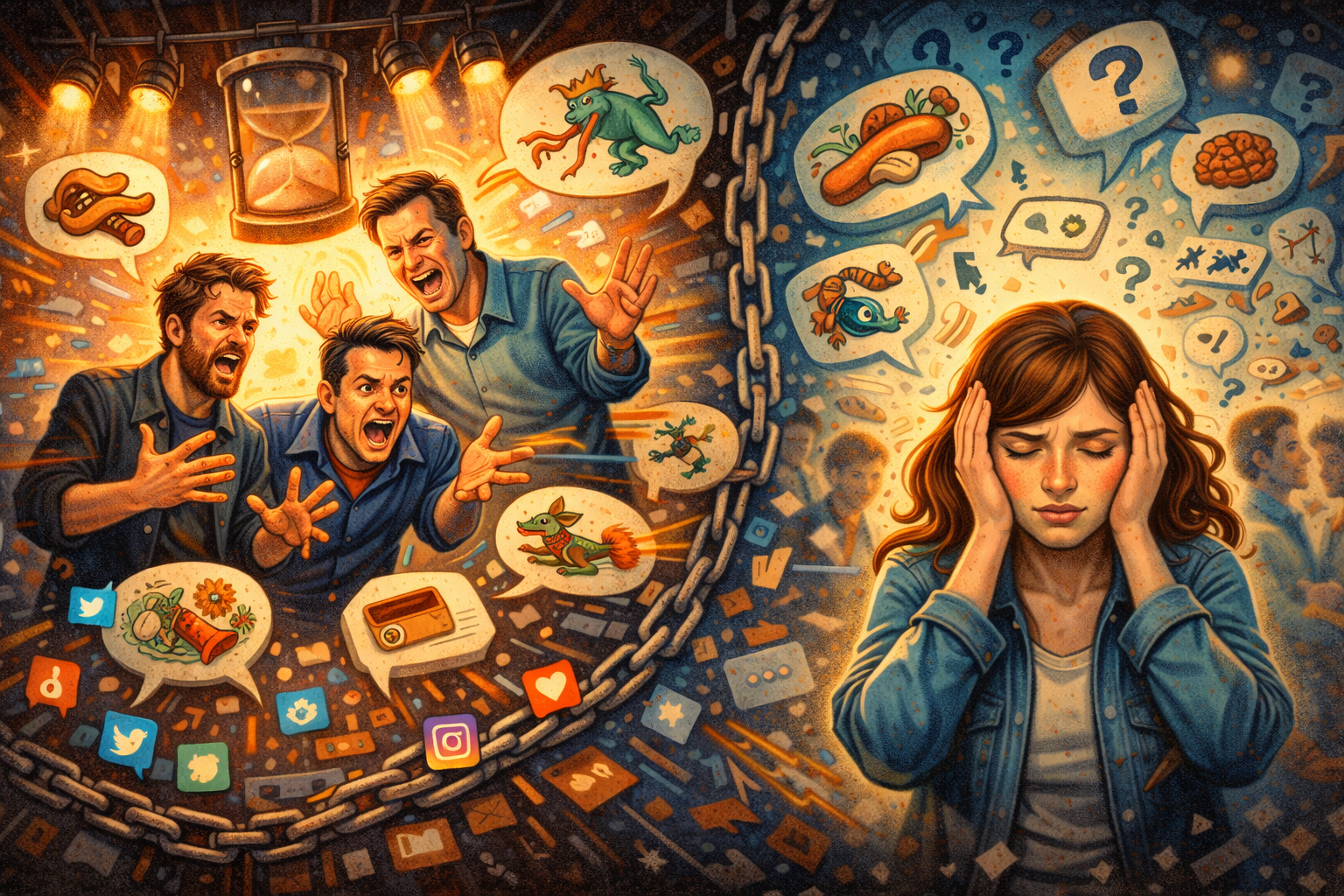
Why Some Comedy Shows Don’t Land When They Move Too Fast
This conversation unpacks why fast-riffing improv shows overload certain kinds of cognition, and why struggling to follow them isn’t a failure of attention but a mismatch between format and how meaning stabilizes.
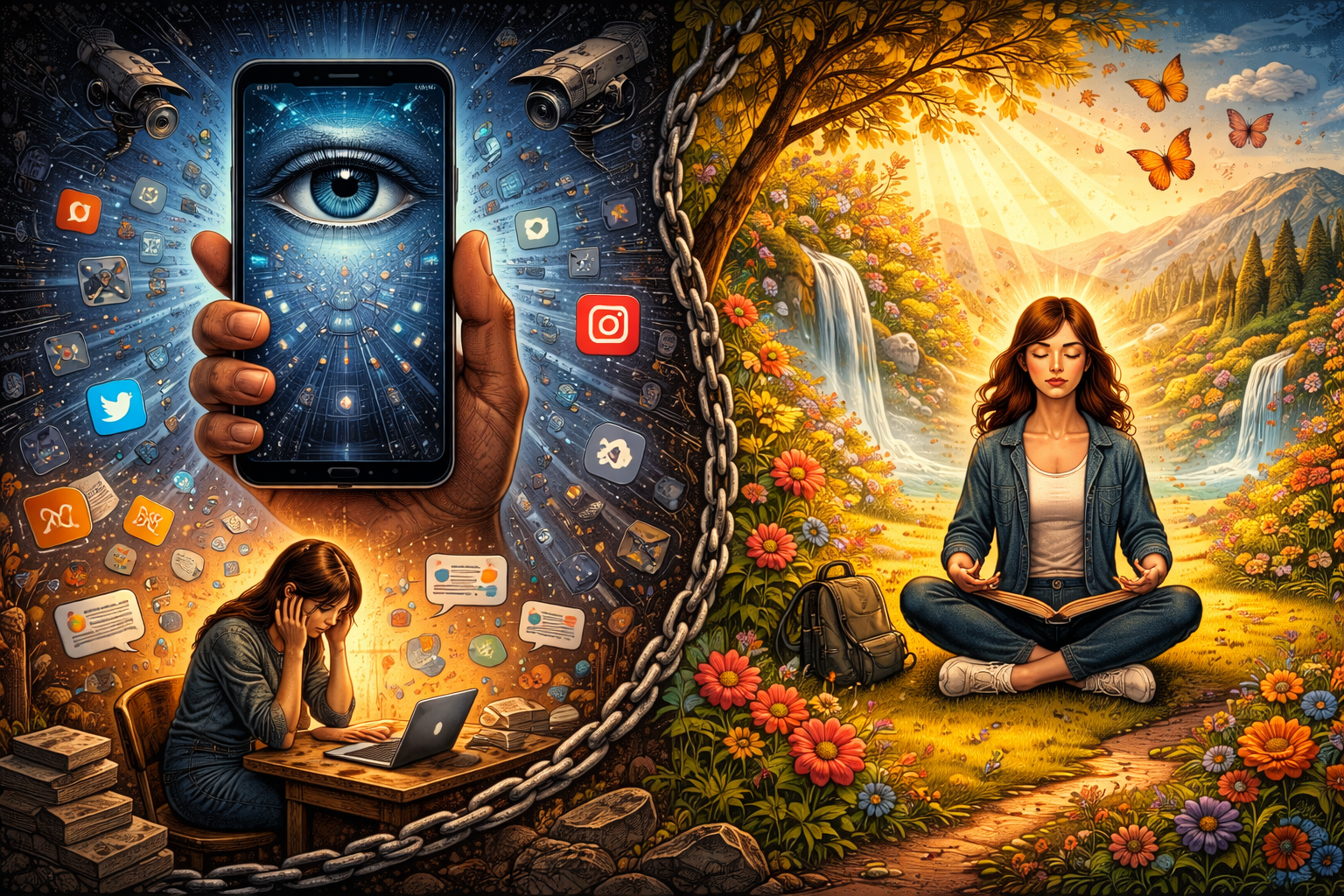
Phones Aren’t Listening—Prediction Is
Phones feel invasive not because they spy, but because predictive systems work unnervingly well; “digital detox” advice often misses how phones function as regulation tools, not toxins.

Why Storytelling Felt Impossible After Evangelical Christianity
Evangelical Christianity didn’t just shape belief—it hijacked imagination. This conversation explores how story, meaning, and interpretation were turned into surveillance, and why learning how stories actually work restores agency rather than threatening it.
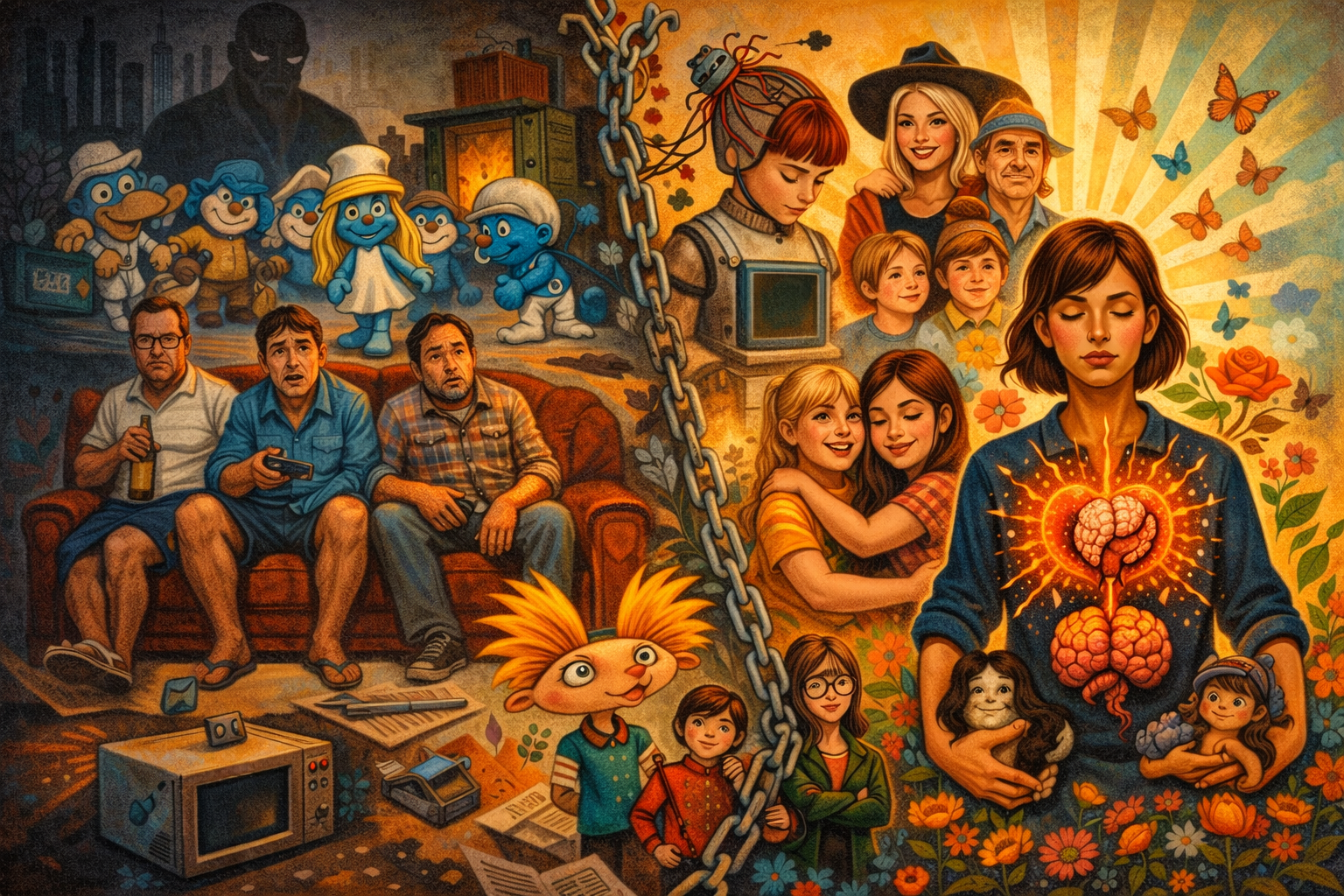
Why 80s and 90s Sitcom Men Feel Unwatchable Now
Rewatching suburban sitcoms from the 80s and 90s reveals a pattern that’s hard to unsee: male incompetence rewarded, female labor erased, and sentiment used to cover moral emptiness. This conversation traces why that realization lands so sharply now.
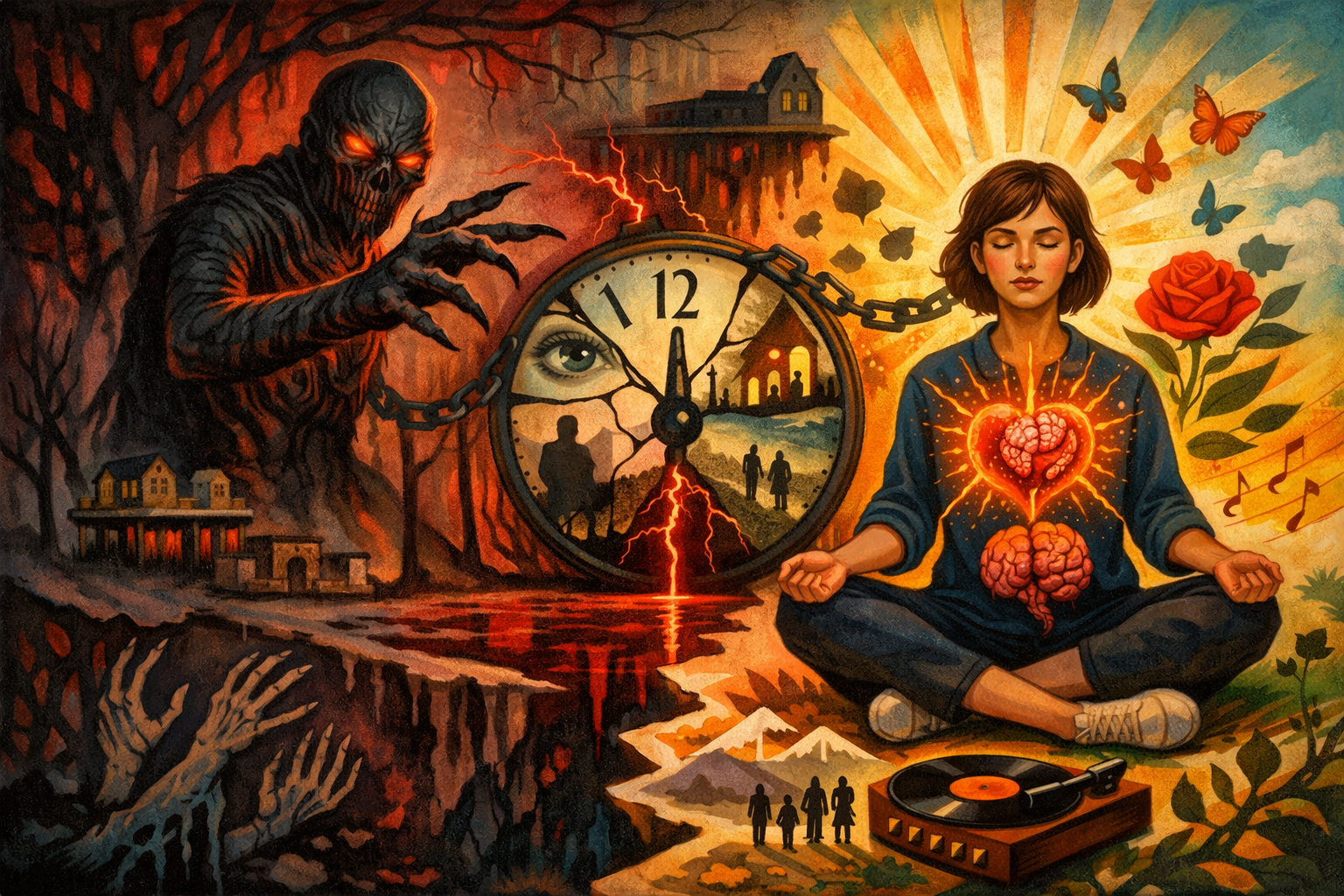
Vecna as Trauma: Why Stranger Things Gets the Mind Right
Stranger Things doesn’t just use trauma as a metaphor. Vecna behaves exactly like unintegrated trauma does in a nervous system—recursive, time-collapsed, meaning-first, body-last. This conversation breaks down why that accuracy matters.