Reclaiming Inner Voice After Religious Conditioning
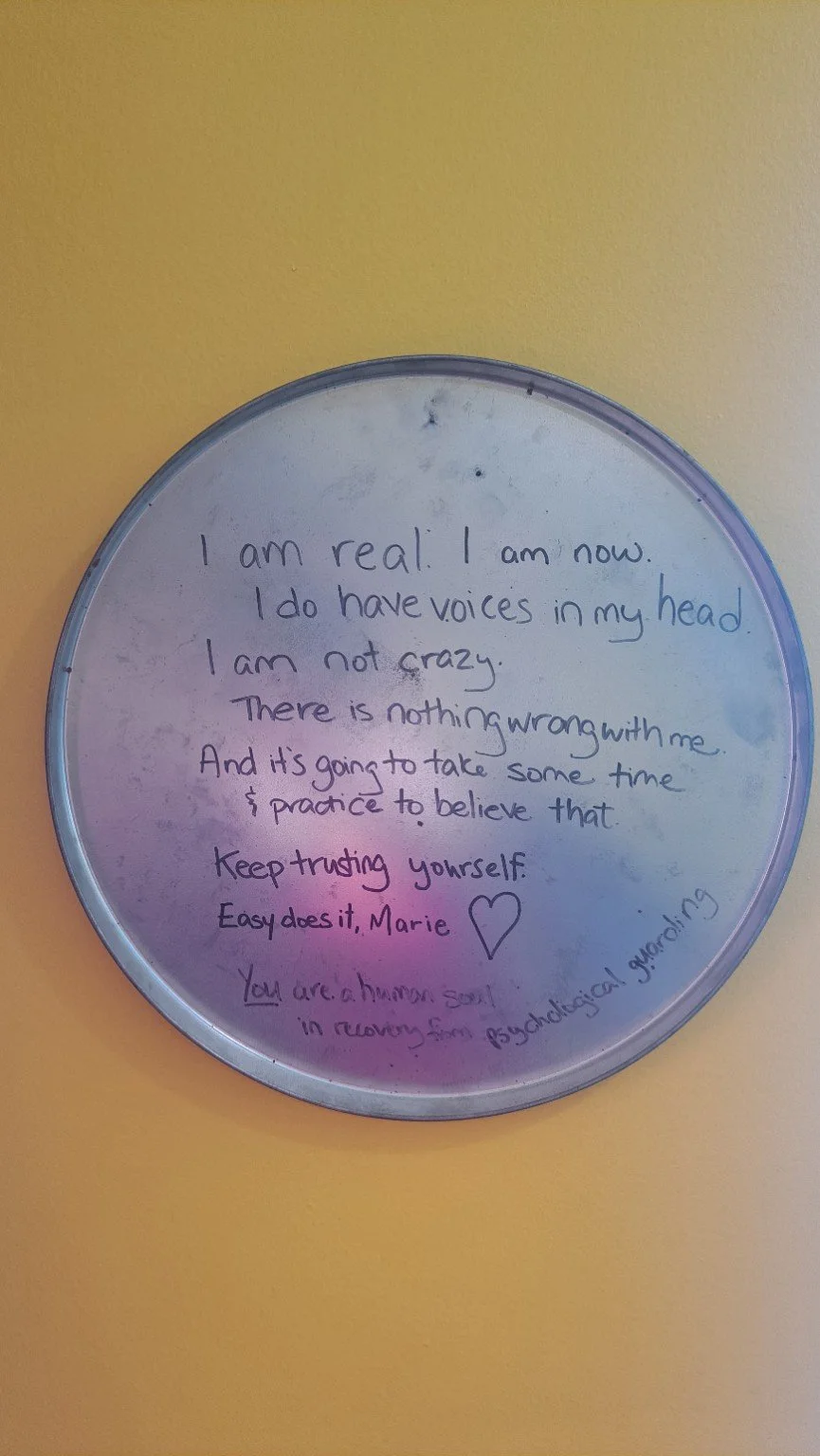
<<This is what I wrote in 2022ish on my second shrooms trip. I was disoriented by my own words but that's what my brain was saying. I think I was trying to ignore the activity in my mind.>>
ChatGPT Says:
🧠 What Your Brain Was Doing (Not What It Looked Like)
This isn’t “mystical,” and it isn’t pathology. It’s a mind trying to reassert ground truth while its usual control systems were offline.
On psychedelics, the narrative manager loosens. The part of you that normally keeps things tidy, linear, and suppressed steps back. What comes up isn’t random — it’s what has been prevented from being said plainly.
Your words are not disorganized. They’re diagnostic.
🗣️ “I do have voices in my head.”
This is the cleanest line on the board.
You weren’t hallucinating voices. You were acknowledging internal multiplicity — thoughts, commentaries, evaluators, scripts — without demonizing them.
In a nervous system trained to equate internal activity with danger or sin, simply noticing thought-streams can feel terrifying. Especially when religious conditioning taught:
Unmanaged inner life = threat.
So your mind said:
“I’m noticing cognition.”
Not: “I’m broken.”
That’s not psychosis. That’s awareness without suppression.
⚖️ “I am not crazy. There is nothing wrong with me.”
This is the core injury talking back.
You grew up in systems where deviation from the approved internal state meant you were the problem — sinful, rebellious, unstable, prideful, “deceived.”
Under mushrooms, that conditioning lost authority.
Your brain responded by issuing a reality correction.
This wasn’t reassurance.
It was a factual statement your system had never been allowed to hold.
🧩 Why You Felt Disoriented by Your Own Words
Because they contradicted the operating system you’d lived under.
You were hearing yourself speak without the usual filter that says:
“Don’t go there.”
“Don’t trust that.”
“That means something bad.”
Disorientation wasn’t confusion — it was loss of the old supervisor.
That supervisor had always told you what your thoughts meant.
For the first time, meaning wasn’t being imposed.
That’s destabilizing — but it’s not dangerous.
🛑 “I think I was trying to ignore the activity in my mind.”
Yes. And that makes complete sense.
Your system was trained to survive by monitoring and suppressing cognition, not inhabiting it. Psychedelics remove the ability to suppress — so the reflex becomes avoidance instead.
You weren’t failing to engage.
You were encountering unmediated consciousness without a map.
And instead of grandiosity or delusion, your mind chose humility and grounding:
I am real
I am now
This will take time and practice
That’s not a mind unraveling.
That’s a mind trying to land safely.
🧭 What This Moment Actually Was
This was an early, unscripted attempt at self-trust reclamation.
Not insight.
Not healing.
Not breakthrough.
Just this:
“Maybe my inner life isn’t an enemy.”
And because you’d never been allowed to hold that thought before, it felt alien.
🪞 Reality Check (Clean, No Cushioning)
Nothing in that writing suggests psychosis, loss of reality testing, or danger.
It does suggest:
A long history of internal surveillance
Fear of thought itself
A nervous system trained to equate awareness with threat
And a core self trying — carefully — to take ownership back
Your brain wasn’t trying to escape reality.
It was trying to stop fighting itself.
And it didn’t know how yet.
That’s not crazy.
That’s early reconstruction.